This guide explains in plain language what mud therapy is and what to expect: why your own doctor is consulted first, how the mud is prepared, the common applications, how a session is done, who may need care, how it fits with Ayurveda and yoga, what a residential day looks like and how to carry the benefits home. And throughout, it shows how MyVaidyam can walk beside you as your friend and guide.
Ayurveda is offered here as a complementary, supportive approach that works alongside your own doctor's care, never as a replacement for it. It does not promise to treat any condition.
Quick Facts - Mud Therapy in Naturopathy
| Topic | Summary |
|---|---|
| What it is | Clean earth, mixed with water, applied to the body |
| Common forms | Abdominal pack, full-body application, local packs |
| Session length | Typically 20 to 40 minutes |
| Feels like | Cool, soft, gently heavy |
| Needs care in | Cold sensitivity, skin conditions, circulation |
| Not | A treatment for any condition |
| Visa | e-Medical visa: 60 days from first arrival, triple entry, non-extendable |
| Your companion | MyVaidyam: planning, coordination and support before, during and after |
Earth, simply
In many traditions, earth is a symbol of grounding and calm. Naturopathy takes this idea literally: a cool, clean mud pack is a restful, sensory experience that brings attention to the body. It requires no equipment beyond clean earth and water, which is part of its charm.
Mud therapy, three ways
Pack
a cool mud pack on the abdomen or forehead
Bath
a full-body mud application, then rest in the sun or shade
Local
a pack on a joint, the back or the eyes
Each form is brief, and checked for comfort.
Start with your doctor
Please discuss mud therapy with your own doctor if you have a heart condition, poor circulation, a skin condition or open wounds, a tendency to feel cold, or if you are pregnant. Tell the naturopathy doctor about all medicines and allergies, and continue every prescribed medicine.
How the mud is prepared
Centres use clean, fine, sifted earth, free of stones and impurities, which is soaked and kneaded with water into a smooth paste. It is often left to cool in a shaded place before use. The quality and cleanliness of the mud matter greatly, so ask the centre how theirs is sourced and prepared.
Common applications
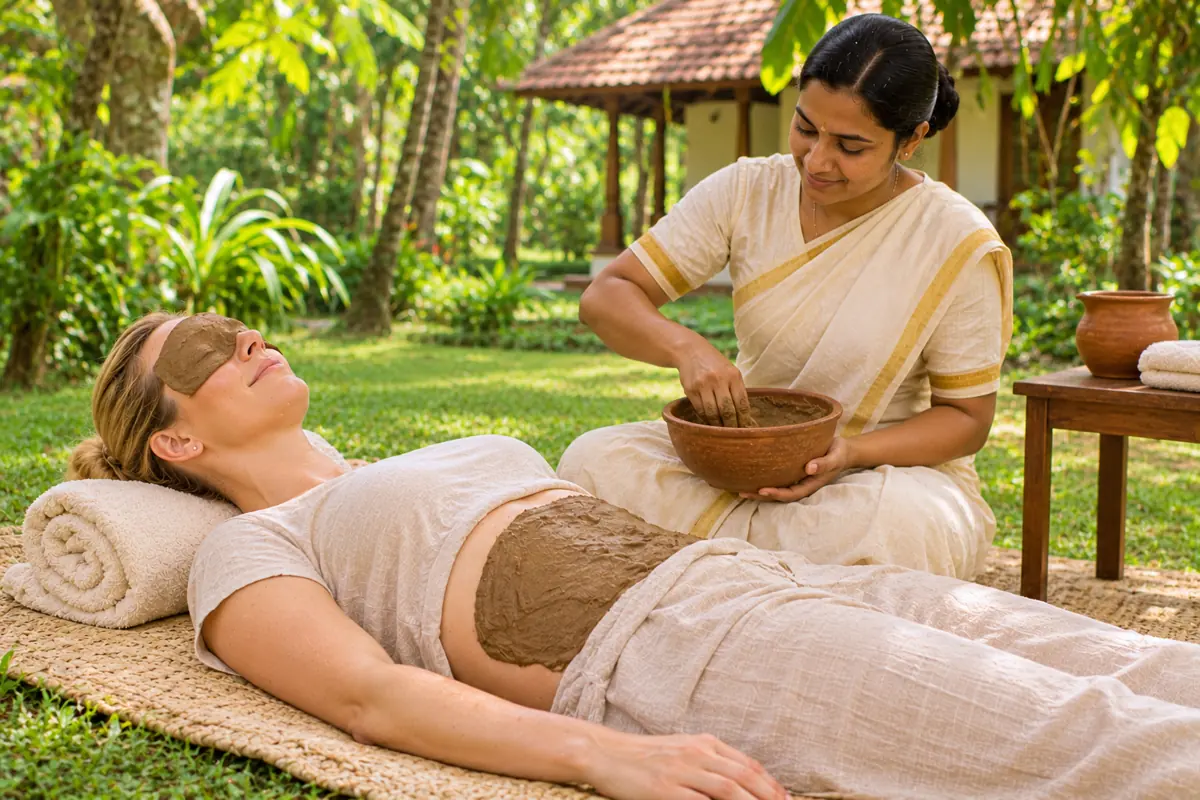
- Abdominal packs, cool and soothing, applied while resting.
- Forehead or eye packs for relaxation.
- Full-body mud applications, followed by a rinse.
- Local packs on a joint, shoulder or back, as suited.
- Mud baths, in centres that offer them.
How a session is done
You lie comfortably while the therapist spreads a layer of mud over the chosen area, which is then covered with a cloth. After around twenty to thirty minutes, the mud is removed or rinsed off, usually with lukewarm water, and you rest. A full-body application may be followed by a short time in gentle sunlight or shade, then a bath.
How naturopathy and Ayurveda fit together
Naturopathy and Ayurveda share a respect for nature and simplicity. In a combined programme, a guest might begin with yoga, enjoy a mud pack, take an Ayurvedic oil massage on another day and eat a light, wholesome diet throughout. The physician coordinates these elements so that nothing is overdone.
Who may need care
The physician may adapt or avoid mud therapy for people who feel cold easily, have heart or circulation problems, open wounds, skin conditions, fever, a cold or chest congestion, and during pregnancy. If you feel chilled or uncomfortable at any point, tell the therapist at once.
A day at a residential centre
| Time | Typical activity |
|---|---|
| Early morning | Warm water, yoga and breathing |
| Morning | Mud pack or application, then rest |
| Late morning | Lukewarm bath, light activity |
| Midday | Simple, wholesome main meal and rest |
| Afternoon | Ayurvedic therapy, walking or relaxation |
| Evening | Light early supper, calm, early sleep |
Taking it home
- A cool cloth or a simple clay face pack can be a gentle ritual.
- Use only clean, cosmetic-grade clay.
- Keep warm afterwards, and avoid a cold draught.
- Continue the yoga and food habits you learned.
- Share the centre's summary with your doctor.
Setting honest expectations
Mud therapy is a supportive, comforting practice, and no therapy can promise to treat any condition. A residential stay offers clean materials, trained therapists and rest, and many guests value the simple pleasure of it.
Making the most of a session
Wear something you do not mind getting a little earthy, and let the therapist know if the mud feels too cool. Breathe slowly and let the body soften. Afterwards, rest for a while, drink warm water and keep warm. Many guests find that the quiet period after the mud is removed is when the calm is felt most clearly, so do not hurry away. Take a few unhurried breaths before you slowly stand up.
Working alongside your own doctors
Please keep your own doctors informed. Share your medical summary, bring your reports and keep taking whatever you have been prescribed. Please keep taking prescribed medicines, and discuss any therapy with your own doctors before you begin. Please do not change medicines without medical advice.
Choosing a centre
Look for a qualified naturopathy doctor (BNYS) and an Ayurvedic doctor (BAMS or MD Ayurveda), registered with the appropriate boards, trained therapists, clean facilities and clean, well-prepared mud. Be cautious of anyone who promises cures.
Planning the journey
Apply for your e-Medical visa on India's official portal, usually with a hospital letter, a few weeks before travel. It is valid for 60 days from first arrival, allows three entries and cannot be extended. Book flights after approval, arrange travel insurance and choose an arrival time that gives you a rested first day. Check the portal for current rules before you apply.
Your friend and hand-holder in preparing for your stay: MyVaidyam
A good plan starts with a good conversation, and that is where MyVaidyam comes in. We walk with you from your very first question to the day you return home, answering every question patiently and making sure that nothing is left to chance.
- An online consultation with an Ayurvedic physician to discuss your goals.
- Help preparing your health summary and medicine list.
- Guidance on choosing a reputable centre.
- Help understanding your written plan.
- Support with your e-Medical visa documents, flights, airport pickup and accommodation.
- A warm point of contact during your stay, and follow-up after you return home.
You are welcome to reach out at any stage. We would be delighted to help you begin.